
Storm Drain Versus Sewer: Know the Difference

A puddle climbing toward your garage, a gurgling toilet, and a wet area near an outside drain can all feel like the same emergency. They are not. The difference between a storm drain versus sewer problem determines where the water is coming from, what may be causing the blockage, and which repair approach makes sense.
For Willamette Valley property owners, that distinction matters most during heavy rain, leaf-drop season, and any time an aging pipe starts acting up. A quick look at where the water appears can provide clues, but a proper diagnosis prevents the wrong drain from being cleaned - or a recurring problem from being treated as a one-time clog.
Storm Drain Versus Sewer: What Each System Does
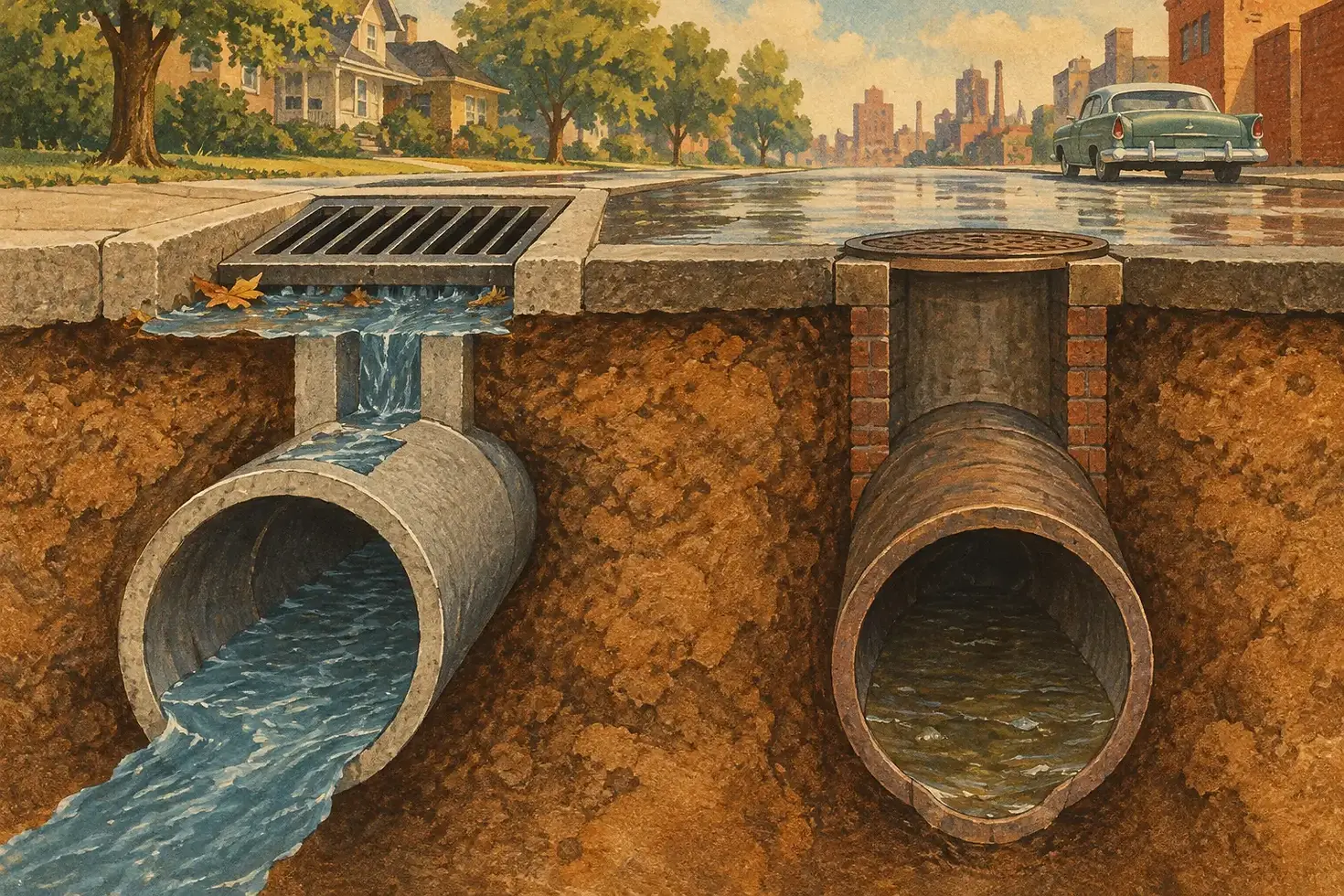
A storm drain manages rainwater. It may include curb inlets, catch basins, driveway drains, parking-lot drains, yard drains, roof downspouts, and underground pipes that carry runoff away from a property. Depending on the local system, that water may flow to a drainage ditch, detention area, creek, river, or municipal stormwater system.
A sanitary sewer carries wastewater from inside a building. Toilets, sinks, showers, tubs, floor drains, washing machines, and commercial fixtures drain into this system. The wastewater travels through the building sewer line and eventually reaches a treatment facility, where it is processed before being released or reused according to local requirements.
The systems serve different jobs and should remain separate. Stormwater is not meant to carry sewage, grease, wipes, or household chemicals. A sewer line is not designed to handle large volumes of rainwater from a roof, driveway, or parking lot.
There are exceptions in some older communities with combined systems, where stormwater and wastewater share infrastructure. Still, property owners should never assume an outside drain ties into the sanitary sewer. The only reliable answer comes from records, locating equipment, or an in-pipe camera inspection.
Where the Trouble Shows Up
The location and type of water are often the first useful clues.
A storm-drain problem usually becomes obvious outside. Water may pool around a catch basin, run across a driveway, flood a low spot in the yard, or spill from a downspout connection. The water is generally rainwater mixed with leaves, soil, mulch, gravel, and other outdoor debris. It may be muddy, but it should not smell like sewage.
A sewer problem usually shows itself indoors or near the building sewer line. Common signs include slow drains throughout the building, toilets that bubble when another fixture drains, water backing up into a tub or shower, sewage odors, or wastewater coming up through a floor drain. If several fixtures are affected at once, the issue is more likely in the main sewer line than in a single sink drain.
That said, drainage problems can overlap. A blocked exterior yard drain may send rainwater toward a foundation or basement entrance. A sewer cleanout located in a low area can become buried or hard to access during flooding. Heavy groundwater can also expose weaknesses in damaged sewer pipes. The symptoms may arrive together, but the pipe systems and solutions are still different.
What Clogs a Storm Drain?
Storm drains are built to move water, not to filter out everything the weather carries along. Leaves are a frequent culprit in Salem, Albany, Stayton, and surrounding communities, especially where mature trees sit near roof drains, curbs, and catch basins. Pine needles, moss, bark, sediment, and gravel can form a dense blockage over time.
On residential properties, a downspout line can clog underground where it turns, sags, or meets a buried yard drain. Landscaping work can introduce soil and mulch into an inlet. Crushed pipe, shifted fittings, and roots can also restrict a private stormwater line.
On commercial sites, parking-lot catch basins collect a larger volume of sediment, trash, and organic debris. If routine maintenance is delayed, water may pond around entrances, loading areas, or customer parking. That is more than an inconvenience. Standing water can create slip hazards, damage pavement, and direct runoff where it does not belong.
A clear grate does not always mean a clear pipe. Debris can be packed several feet downstream, or a pipe may hold water because of damage or a poor slope. When flooding continues after surface debris has been removed, camera inspection can show what is happening below ground.
What Clogs a Sewer Line?
Sewer blockages are usually caused by what goes down indoor drains or by the condition of the buried pipe itself. Grease is one of the most common issues. It may enter the line as a warm liquid, then cool and stick to pipe walls. Over time, food particles and other debris collect on that buildup until the line narrows enough to cause slow drains or a backup.
Paper towels, so-called flushable wipes, hygiene products, and excessive toilet paper can snag in a damaged line or on root growth. Unlike toilet paper, many of these products do not break down quickly in water.
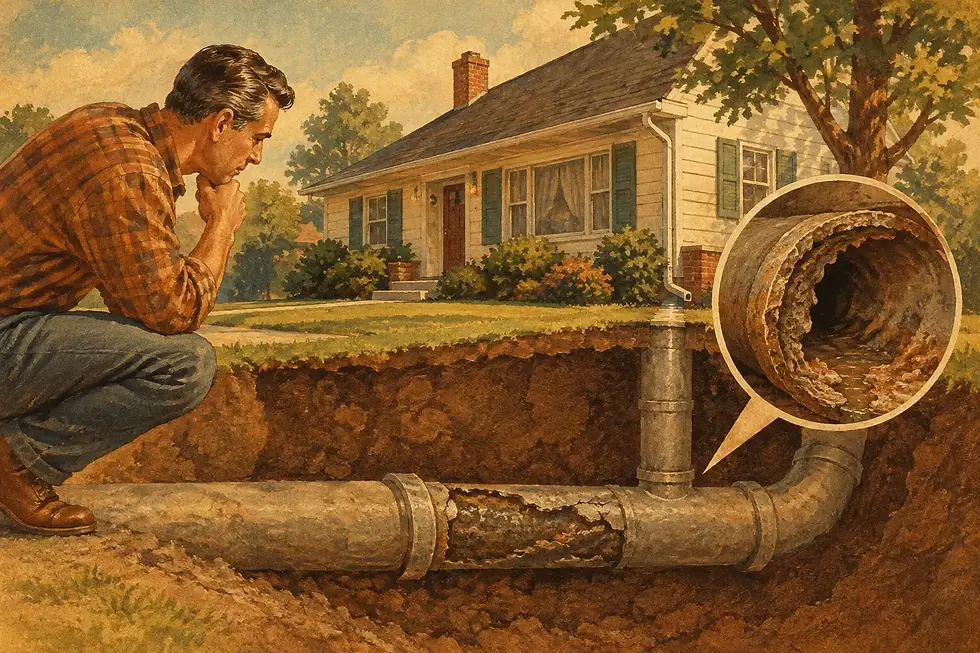
Tree roots are another major concern for older sewer laterals. Roots seek moisture and can enter through small cracks, loose joints, or aging pipe connections. Once inside, they trap paper and solids. Cutting roots may restore flow, but the pipe still needs to be evaluated for breaks, separation, or other conditions that will invite roots back.
A sewer line can also fail because it has settled, bellied, cracked, collapsed, or deteriorated with age. In those cases, repeatedly clearing the same blockage may provide temporary relief without fixing the reason the line keeps clogging.
The Right Fix Depends on the Pipe
A plunger or hand auger can help with a simple fixture clog, but it will not solve a blocked outdoor drainage system or a root-filled main sewer. It can also mask a larger problem until the next heavy use or rain event.
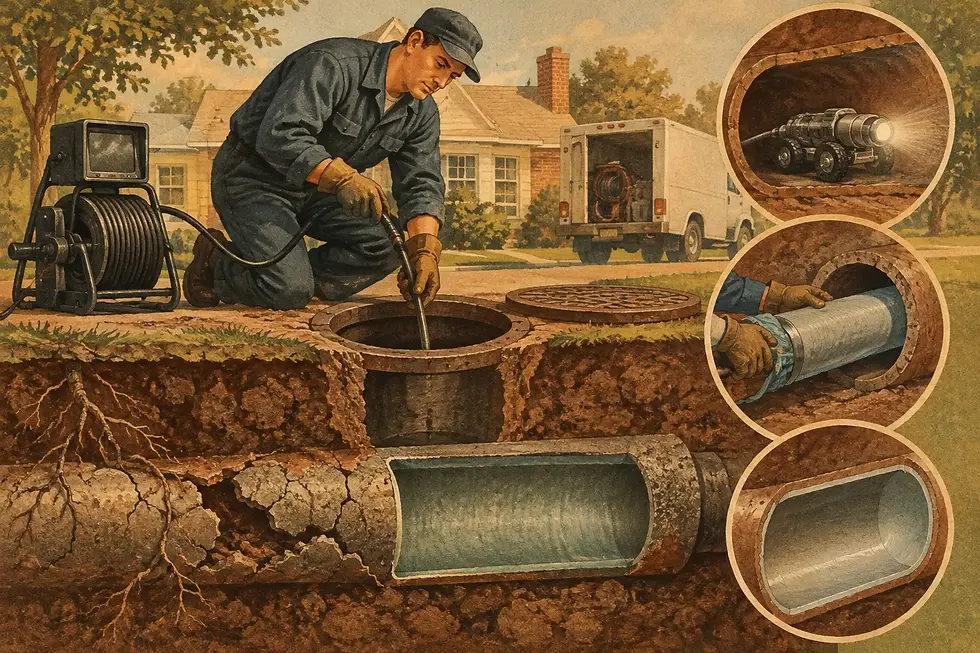
For sewer lines, professional drain cleaning may involve a cable machine to open a blockage, followed by camera inspection to check the pipe condition. Hydro-jetting can be especially effective for grease, scale, sludge, and residual root material when the pipe is suitable for high-pressure cleaning. The camera work matters because it confirms whether the line is clear and identifies damage that cleaning alone cannot correct.
For private storm drains, the approach may include clearing the catch basin, removing debris from a downspout or yard-drain line, and inspecting the underground piping for roots, breaks, or sediment buildup. The best method depends on the pipe material, access points, and where the line discharges. Cleaning blindly with high pressure is not always the right first move when a pipe may be crushed or disconnected.
Public infrastructure is a separate question. Property owners are commonly responsible for private lines on their property, while cities or utilities maintain public mains and street systems. The exact boundary varies by location. If a camera shows the issue is beyond the private connection point, the next step may be contacting the appropriate local utility rather than authorizing unnecessary work on a private line.
What Not to Put in a Storm Drain
Storm drains often discharge to local waterways with limited treatment. That is why paint, oil, antifreeze, concrete washout, pet waste, cleaning chemicals, and trash should never be washed into a curb inlet or outdoor drain.
The same caution applies to a sewer backup. Do not send more water down drains to “push it through,” and do not rely on harsh chemical drain cleaners in a main line. They can create a safety hazard, damage certain pipes, and make professional service more dangerous. Stop using affected fixtures, keep people and pets away from contaminated water, and arrange for prompt help.
When to Call for Drain Service
Call for professional help when water is threatening a building, sewage is backing up, multiple fixtures drain slowly, a catch basin repeatedly overflows, or the same clog returns after being cleared. These are signs that the issue may be deeper in the system than a surface-level blockage.
A camera inspection is particularly valuable for landlords and property managers dealing with repeat complaints. It turns a vague report of “the drain is slow again” into a clear picture of roots, grease, pipe damage, or a line that needs a different maintenance plan. Canyon Drain uses camera diagnostics and professional cleaning equipment to address the immediate blockage while looking for the condition behind it.
The most useful thing you can do before help arrives is notice the pattern: Is the water clean rainwater or wastewater? Did the issue begin during a storm? Are all drains affected or only one? Those details point the service call in the right direction and help protect your property from a much bigger mess.

Comments