
Sewer Repair Options for Aging Damaged Pipes

A sewer backup rarely starts with a dramatic warning. More often, it begins with a toilet that gurgles, a shower that drains slowly, or a bad smell near a floor drain. Understanding your sewer repair options early can help protect your home or business from a messy backup, avoid unnecessary digging, and address the actual condition of the pipe instead of just clearing the immediate clog.
The right repair depends on what is inside the line, where the damage is located, and whether the pipe is still structurally sound. A recurring root blockage needs a different answer than a cracked clay pipe, a sagging section of line, or a sewer lateral that has collapsed. The first step is getting a clear look at the problem.
Start With a Camera Inspection, Not a Guess
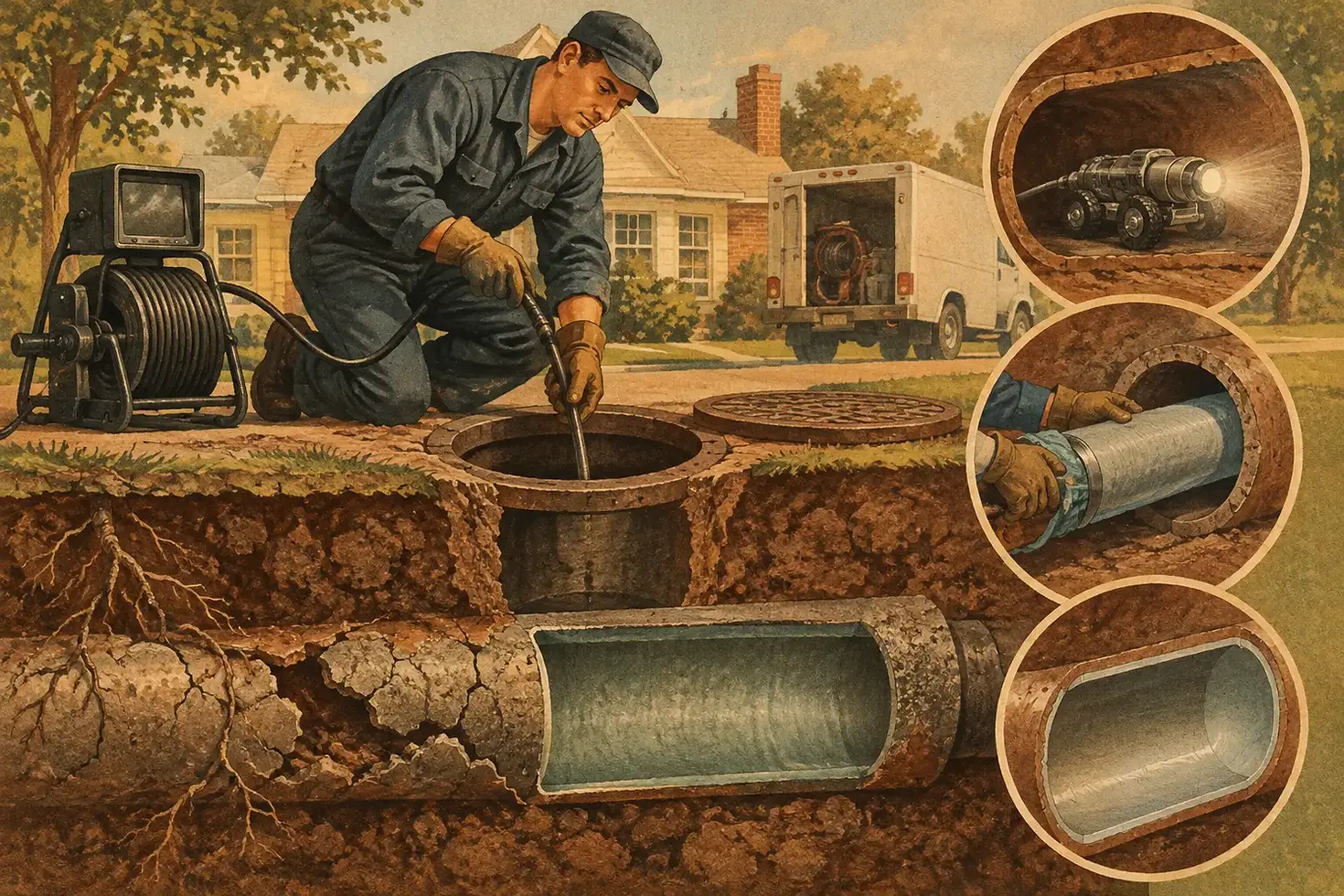
A sewer camera inspection shows the inside of the line in real time. It can identify root intrusion, grease buildup, separated joints, cracks, offset pipe sections, bellies where waste collects, and complete collapses. For a property owner, that means fewer decisions based on assumptions.
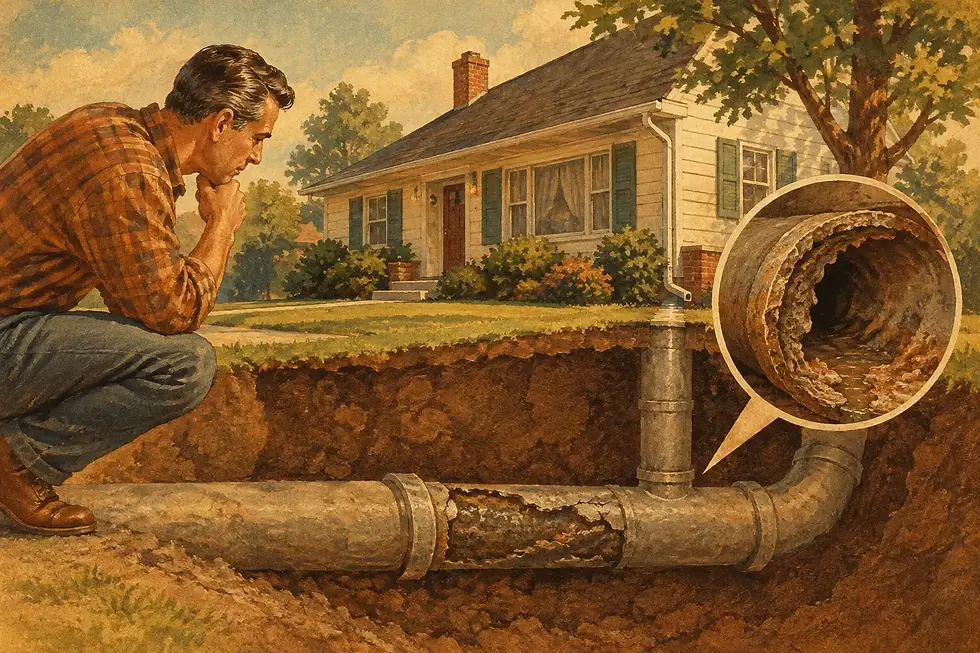
This matters especially with older homes and commercial buildings throughout the Willamette Valley, where clay, concrete, cast iron, and Orangeburg sewer lines may still be in service. Some of these materials can last a long time with maintenance. Others become more vulnerable to roots, soil movement, corrosion, or deterioration as they age.
A camera inspection also helps locate the issue. Damage near an access point may be simpler to repair than a break under a driveway, mature landscaping, a sidewalk, or the building itself. Once the line has been inspected, a drain professional can explain whether cleaning, a targeted repair, trenchless work, or full replacement is the practical next move.
Sewer Repair Options Based on the Problem
Cleaning and root removal for an otherwise sound pipe
Not every sewer problem requires pipe repair. If the camera shows a solid pipe with buildup or roots entering through small joints, thorough cleaning may restore normal flow. Mechanical root cutting removes the root mass blocking the line, while hydro-jetting uses high-pressure water to clear grease, scale, sludge, and debris from pipe walls.
Cleaning is often the right first solution when there is no major crack, collapse, or severe pipe deformation. It can also be a cost-effective maintenance choice for properties with known root activity. The trade-off is that cutting roots out of a damaged joint does not permanently seal that joint. Roots will usually grow back unless the pipe is repaired, lined, or replaced.
For restaurants, rental properties, and other commercial spaces, scheduled cleaning may prevent grease and debris from reaching the point of a full backup. The maintenance interval depends on how the property is used, what the camera shows, and the history of clogs.
Spot repair for a limited damaged area
A spot repair addresses one specific bad section of sewer line. This may be appropriate when a camera finds a localized crack, broken joint, isolated root-damaged area, or short section that has shifted out of alignment while the rest of the pipe remains in good condition.
In a conventional spot repair, the damaged area is excavated and replaced with new pipe. This approach provides a direct, durable fix and allows the crew to correct a problem that cannot be solved from inside the pipe. It may be the best choice when the line has collapsed or has a belly that holds standing water.
The downside is disruption. Excavation can affect lawns, landscaping, patios, driveways, or walkways depending on the pipe location. A good repair plan accounts for access, depth, utilities, and restoration before work begins, so there are no surprises about what needs to be opened.
Trenchless pipe lining for cracks and root-prone lines
Trenchless pipe lining creates a new pipe inside the existing one. A resin-saturated liner is installed through an access point, positioned along the damaged section, and cured in place. Once complete, the liner forms a continuous inner surface that can seal cracks, cover compromised joints, and reduce places where roots can enter.
Lining can be a strong option when the existing pipe still has enough shape and structure to support the process. It is particularly useful when the sewer line runs beneath landscaping, a driveway, or another area where extensive excavation would be disruptive.
Still, lining is not a cure for every sewer defect. A fully collapsed line, severe sag, major offset, or pipe section filled with heavy debris may need excavation first. Lining also slightly reduces the inside diameter of the pipe, though properly designed work generally maintains reliable flow. The camera findings, pipe size, and condition determine whether this trade-off is acceptable.
Pipe bursting when replacement is needed without a full trench
Pipe bursting is another trenchless replacement method. A bursting head is pulled through the old pipe, breaking it apart while pulling new pipe into place behind it. It can replace an entire sewer lateral with durable new material while limiting surface disruption to entry and exit points.
This method may make sense when the old line is too damaged to line but the route is suitable for a trenchless replacement. It is often considered for deteriorated clay, cast iron, or Orangeburg pipe. Soil conditions, utility crossings, pipe depth, and the path of the existing sewer line all affect whether pipe bursting is feasible.
Because the old pipe is displaced as the new pipe is installed, this option requires careful planning. Nearby utilities and structures need to be identified before work starts. When it fits the site, pipe bursting can offer the long-term benefit of a full replacement with less restoration than traditional excavation.
Full excavation and sewer line replacement
Traditional excavation remains the most reliable answer for some problems. If the pipe has collapsed, has multiple bellies, slopes the wrong direction, has severe offsets, or is damaged across several sections, replacing the line from the ground up may be the better investment.
Full replacement gives the installer access to correct the grade of the sewer line, replace failed material, and address underlying conditions that caused the failure. It can be more disruptive upfront, but it avoids trying to preserve a pipe system that has reached the end of its service life.
For a homeowner planning major landscaping, driveway work, or a remodel, coordinating a sewer replacement with that project can sometimes reduce future disruption. For landlords and commercial property managers, replacement may be worth considering when repeat backups are affecting tenants, customers, or daily operations.
How to Choose Between Repair and Replacement
The lowest immediate price is not always the lowest long-term cost. A line that needs root cutting every year may be manageable for a while, but repeated emergency calls, cleanup costs, and the risk of a backup can eventually outweigh a permanent repair.
Consider the age and material of the pipe, how often the problem returns, the type of defect found on camera, and the location of the line. One short crack in an otherwise sound pipe may justify a spot repair or liner. Widespread cracks, repeated root intrusion, and multiple failed joints may point toward replacement.
It also helps to think about the property itself. A sewer line beneath an open lawn is different from one beneath a finished basement, a heavily landscaped yard, or a busy commercial parking area. The best option balances durability, access, disruption, and budget without ignoring the condition of the rest of the line.
What to Do When a Sewer Problem Is Urgent
If multiple fixtures are backing up, sewage is coming up through a floor drain, or you notice wastewater outside near the sewer route, stop using water where possible. Avoid flushing toilets, running the dishwasher, doing laundry, or taking showers until the line is inspected. Continued water use can make an indoor backup worse.
A prompt camera inspection and clearing service can relieve the immediate blockage and show what caused it. Canyon Drain helps property owners separate a one-time clog from a pipe condition that needs a lasting repair, using the same practical approach for homes, rentals, and businesses.
A sewer line does not need to fail completely before it deserves attention. When drains are slowing down, roots keep returning, or backups have become a pattern, a clear camera diagnosis can turn a stressful problem into a repair decision you can make with confidence.


Comments