
A Homeowner’s Guide for Aging Sewer Pipes

A sewer line can work quietly for decades, then announce a problem at the worst possible time: when a toilet will not flush, a shower drain fills from below, or wastewater comes up through a floor drain. This guide for aging sewer pipes helps property owners recognize what is happening underground before a recurring clog turns into a damaging backup.
Older homes and commercial buildings across the Willamette Valley often have sewer systems made from materials that were standard at the time, not necessarily materials designed to last forever. Clay, cast iron, concrete, and some early fiber-based pipe products can all develop issues as the years pass. The right response is not always replacement. A camera inspection can show whether professional cleaning, a targeted repair, or a larger sewer-line project makes the most sense.
Why Older Sewer Lines Start Failing
Age alone does not tell the whole story. A 60-year-old sewer line may still be in fair condition, while a younger line can have serious damage from poor installation, ground movement, or root intrusion. What matters is the pipe’s material, its condition at the joints, the slope of the line, and what has entered it over time.
Clay pipe is common in older properties and can last a long time, but its segmented joints can shift or separate. Those small openings invite fine tree roots to enter in search of moisture. Once inside, roots catch toilet paper, grease, and other debris until flow becomes restricted.
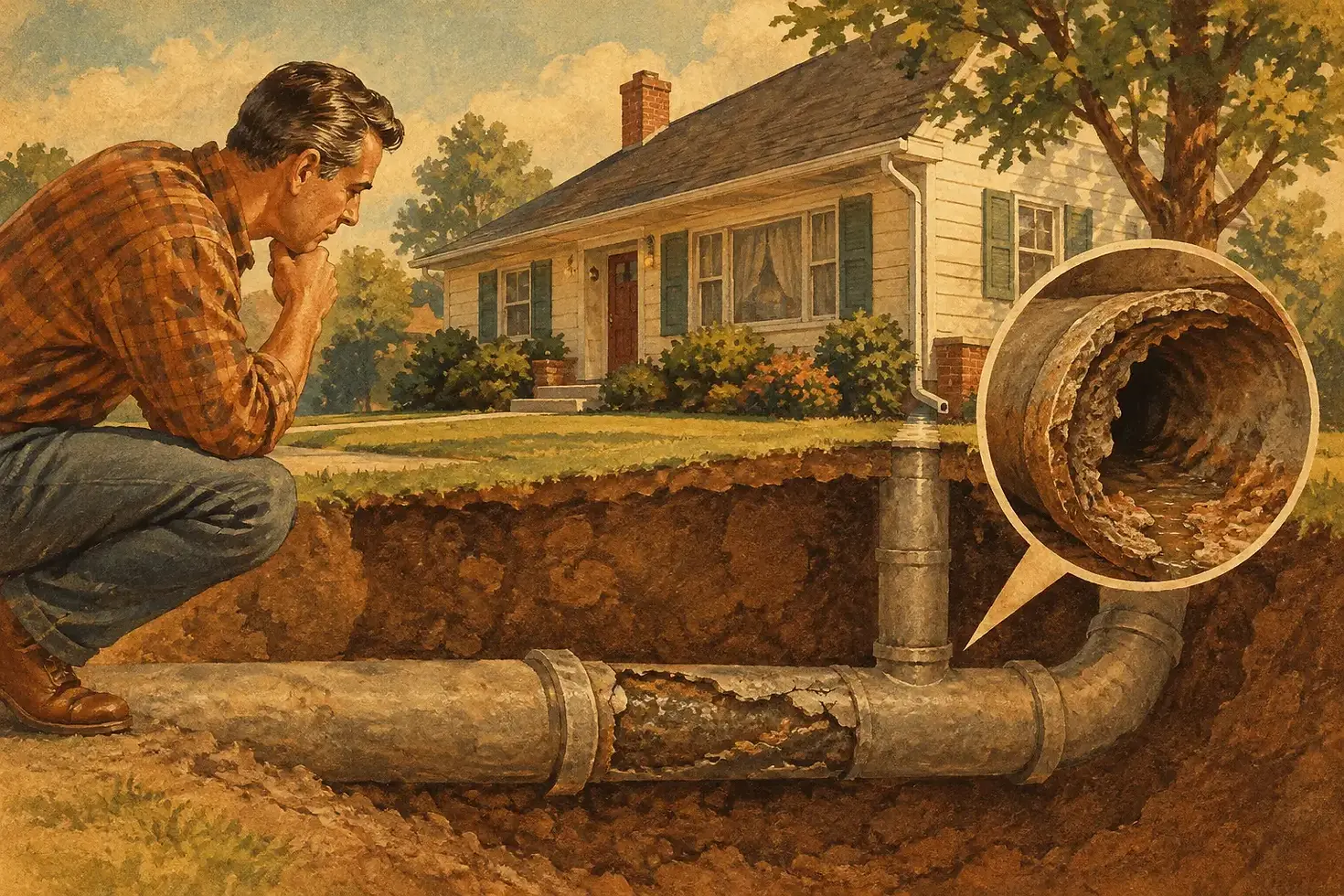
Cast-iron pipe is durable, but it can corrode from the inside. As its interior surface becomes rough or scaled, waste does not move as freely. In more advanced cases, the bottom of the pipe can deteriorate, creating low areas where solids and water collect. Concrete pipe may crack or wear at joints, while older fiber-based pipe can soften, deform, or collapse as it ages.
Oregon’s wet seasons, mature landscaping, and shifting soils can add stress to any underground line. A sewer pipe may also settle unevenly, reducing the slope needed for reliable drainage. That is why a line that has been cleared several times deserves a closer diagnosis rather than another guess.
Warning Signs You Should Not Ignore
One slow sink is often a local drain issue. Several fixtures acting up at once usually point farther down the system, often in the main sewer line. Pay attention to patterns, especially if they return after plunging or basic drain clearing.
Common signs of an aging sewer line include:
Toilets that bubble, gurgle, or change water level when nearby fixtures drain
Slow drainage in more than one bathroom, kitchen, or laundry area
Sewage odors indoors, around the yard, or near a crawlspace
Water or wastewater backing up at a shower, tub, or floor drain
Frequent clogs that clear temporarily but come back within weeks or months
Unusually green, wet, sunken, or soft spots along the likely sewer-line path
A backup through the lowest drain in the building is especially urgent. Stop using water fixtures if possible. Running a dishwasher, flushing toilets, or doing laundry can add more wastewater to a line that is already blocked and increase the cleanup needed inside the property.
A Guide for Aging Sewer Pipes: Start With a Camera Inspection
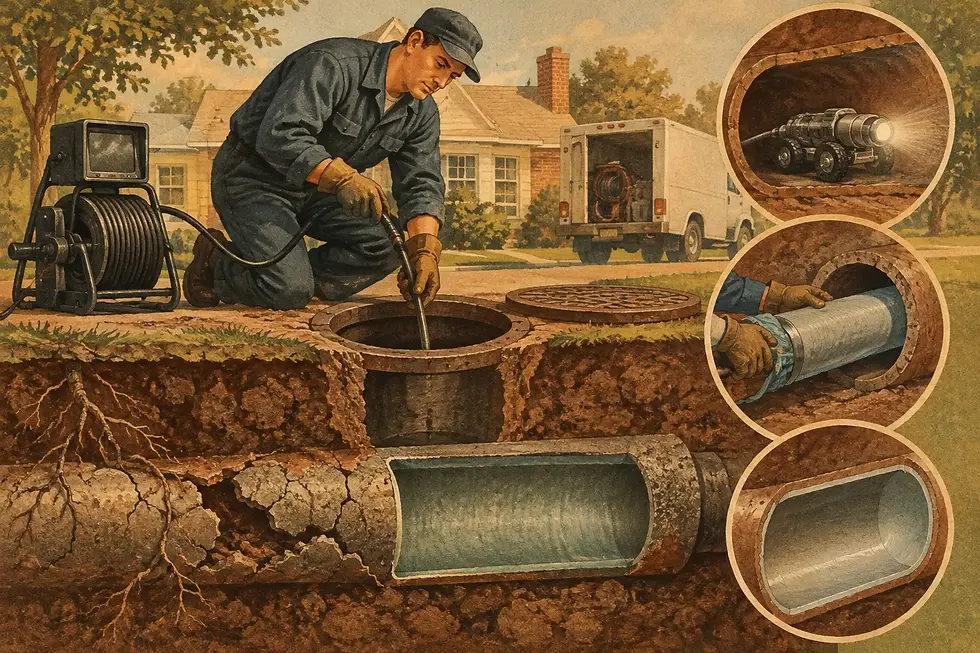
When a sewer problem repeats, a real-time camera inspection is usually the clearest next step. A technician sends a specialized camera through the sewer line to see the blockage and the pipe condition from the inside. This identifies whether roots, grease, wipes, broken pipe, a belly in the line, offset joints, or another issue is causing the trouble.
Camera work matters because the same symptom can have different causes. For example, a line filled with roots may need thorough cleaning and ongoing maintenance. A line with a collapsed section will not be fixed by cleaning alone. If the camera reveals a small isolated crack, a spot repair may be reasonable. If the pipe is failing in several places, replacement may offer better long-term value.
Ask for a plain explanation of what the camera shows. You should understand where the problem is located, whether the line is flowing after service, how severe the damage is, and what could happen if repairs are delayed. For landlords and property managers, documenting the line condition can also help plan maintenance and communicate clearly with tenants.
Cleaning Can Help, but It Has Limits
Professional drain cleaning is often the first practical solution for a blocked sewer line. Cabling can cut through roots and break up many obstructions. Hydro-jetting uses high-pressure water to scour grease, sludge, loose scale, and root debris from the pipe walls. The best method depends on the pipe material, the obstruction, and how fragile the line appears on camera.
Hydro-jetting can be very effective for grease-heavy commercial lines and recurring buildup in a structurally sound pipe. It is not a one-size-fits-all answer. A severely cracked, collapsed, or deteriorated line may need a gentler approach or repair first. A responsible technician evaluates the pipe rather than applying maximum pressure to every situation.
Avoid relying on chemical drain cleaners for a main sewer problem. They rarely remove roots or repair pipe damage, and repeated use can create hazards for anyone who later services the line. They can also sit in a blocked pipe, making the situation more difficult and unpleasant.
Know When Repair or Replacement Is the Better Investment
A repair is often appropriate when damage is limited to one accessible section. This may include a cracked joint, a short root-damaged area, or a section affected by a localized break. Repairs can restore flow without replacing an entire line, but they do not solve unrelated defects elsewhere in an older pipe.
Replacement becomes more practical when the sewer line has multiple broken sections, widespread corrosion, repeated root intrusion at many joints, major sagging, or collapse. The upfront cost is higher, and the work may involve excavation depending on the property and repair method. Still, continually paying for emergency clearing can cost more over time while leaving the risk of a backup in place.
The decision should come down to evidence, not pressure. Consider the inspection findings, the frequency of service calls, the age and material of the pipe, access to the line, and plans for the property. A homeowner planning to stay for years may make a different choice than an owner preparing a property for sale. For a business, avoiding unexpected closures and sanitation concerns may make a permanent repair more urgent.
Protect an Older Sewer Line Between Service Visits
Good habits will not fix broken pipe, but they can reduce avoidable blockages. Keep grease, coffee grounds, food scraps, wipes, paper towels, and hygiene products out of drains and toilets. Even products labeled flushable can catch on roots, rough cast iron, or damaged joints.
If roots have been found in the past, schedule maintenance based on the line’s actual condition and history. Some properties need periodic cleaning, while others may go years without trouble after a proper repair. Large trees near the sewer route deserve special attention, but removing a tree is not always necessary or the best first move. The camera findings should guide that decision.
It is also wise to know where the sewer cleanout is located and keep it accessible. A cleanout allows a technician to inspect and clear the line more efficiently, particularly during an urgent backup. Responsibility for the line can vary by location, so confirm where your private line ends and the public sewer connection begins before assuming who handles a repair.
Aging sewer pipes do not have to become a surprise disaster. When drains start sending repeat warnings, prompt camera-based diagnosis gives you a practical path forward. Canyon Drain can help property owners identify the cause, clear the immediate obstruction, and make a straightforward plan for the pipe beneath the property.


Comments