
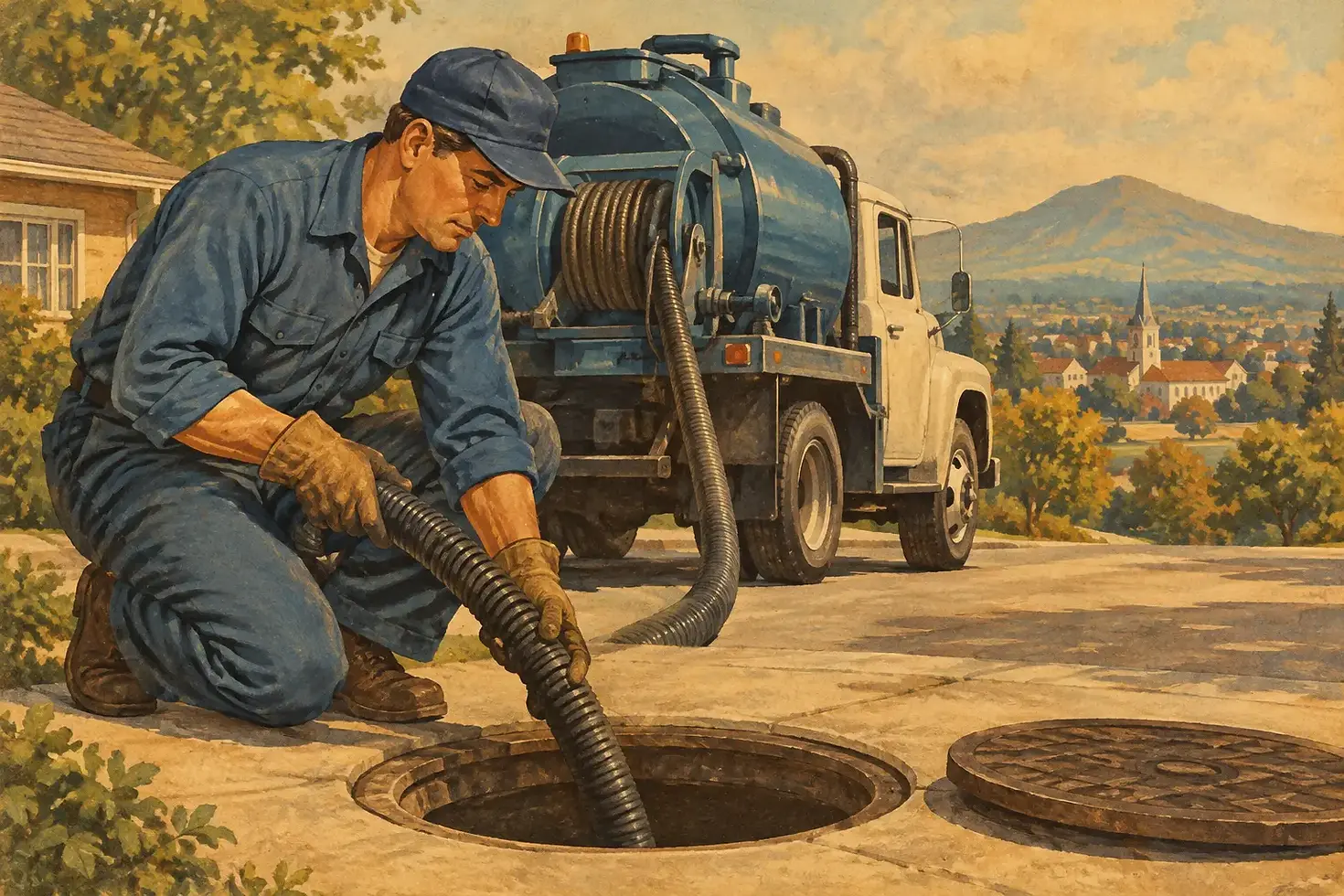
Aumsville Sewer Cleaning Review: What to Expect

A sewer backup rarely gives a homeowner much warning. One day, a toilet gurgles or a tub drains slowly. The next, wastewater is standing in a shower, utility room, or floor drain. This Aumsville sewer cleaning review explains what dependable service should look like when a drain problem moves beyond a simple clog - and how to judge whether the proposed fix addresses the real condition of the line.
For homes, rentals, and small businesses in Aumsville, sewer problems often come down to a few familiar causes: roots entering older pipes, grease and debris collecting in the line, a damaged section of pipe, or a blockage that has been building for months. Clearing the immediate backup matters. Knowing why it happened matters just as much.
What a Good Aumsville Sewer Cleaning Visit Includes
The right approach depends on the symptoms. A single slow bathroom sink may be a local branch-line clog. But when more than one fixture backs up, flushing causes water to rise elsewhere, or sewage appears at a floor drain, the main sewer line is the likely concern. A qualified drain technician should ask about those details before choosing equipment.
The first goal is to restore flow safely. Mechanical cable equipment can cut through many obstructions and reopen a blocked line. It is often an effective starting point for roots, paper buildup, and compacted debris. But clearing a passage through a blockage is not always the same as cleaning the pipe wall or confirming that the pipe is structurally sound.
That distinction is where a service visit becomes more valuable than a quick, temporary drain opening. If a line has backed up repeatedly, a camera inspection can show whether roots remain, whether grease has coated the pipe, or whether cracks, offsets, or a collapsed section are causing trouble. Clear information lets a property owner make a repair decision based on evidence rather than guesswork.
Camera Inspections Make the Review More Useful
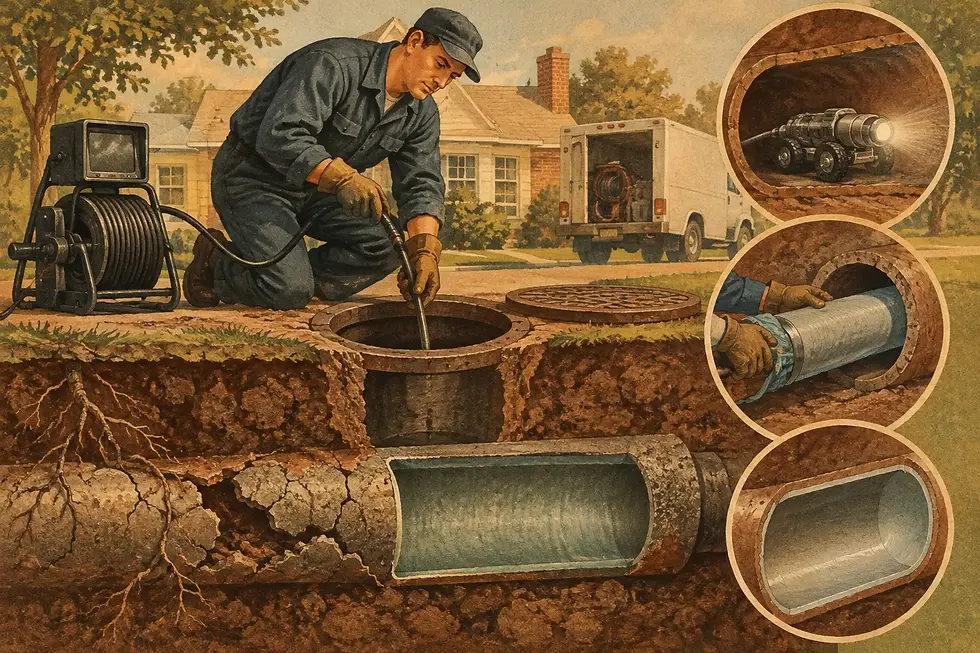
A camera inspection sends a small, flexible camera through the drain line and provides a real-time view of what is happening inside. It is especially useful after a sewer cleaning because the technician can verify whether the blockage has been removed and identify conditions that could create another backup.
Tree-root intrusion is a common example. Roots naturally seek moisture, and even a small opening at a pipe joint can attract them. A cable machine may cut a path through the roots and get the sewer working again. If the camera shows dense root growth along several joints, however, the homeowner should know that future maintenance or pipe repair may be needed.
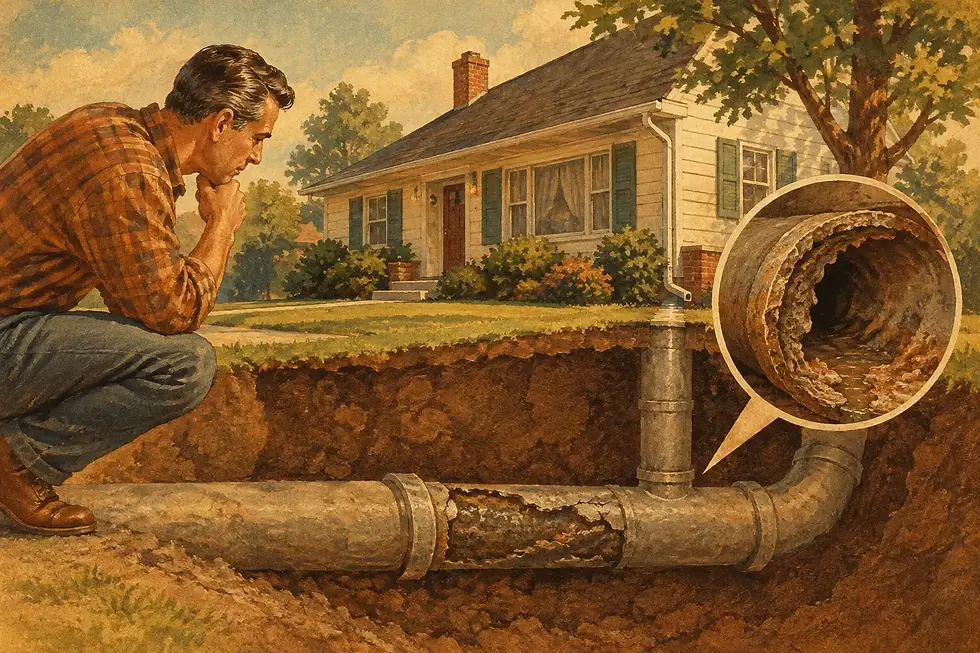
The same is true for pipe damage. A camera can reveal standing water in a low section, separated pipe joints, heavy scale in older lines, or debris caught at a damaged area. Not every finding calls for excavation. Sometimes scheduled cleaning is a reasonable way to manage an aging line. Other times, a targeted repair is the more sensible long-term choice. The right answer depends on the severity, location, and frequency of the problem.
Questions Worth Asking During the Inspection
You do not need plumbing experience to get useful answers. Ask what caused the blockage, whether the line is fully open, and whether the camera showed any damage or remaining buildup. If a repair is recommended, ask what the technician saw that supports it and whether the issue is urgent or can be monitored.
A good explanation should be plainspoken. You should understand whether you are dealing with a one-time clog, roots that will grow back, grease accumulation, or a pipe condition that needs further attention. That clarity is one of the strongest signs of dependable sewer cleaning service.
When Hydro-Jetting Is the Better Option
Hydro-jetting uses high-pressure water to remove buildup from inside the pipe. It can be particularly effective for grease, sludge, scale, and debris that a cable may punch through without fully washing away. For commercial kitchens, rental properties with recurring grease-related clogs, and homes with heavily coated lines, hydro-jetting can offer a more thorough cleaning.
It is not automatically the best answer for every sewer line. Older, damaged, or badly deteriorated pipes should be inspected before high-pressure cleaning is recommended. The purpose of a camera is not to sell an additional service. It is to determine whether the pipe can safely benefit from that cleaning method.
For a line filled with roots, a technician may first use a cutting tool to reopen the pipe, then use water pressure to remove loose debris if the pipe condition allows it. For a line with a collapsed section, cleaning alone will not solve the underlying issue. These are the trade-offs a thorough service provider should explain before work begins.
Pricing and Communication Matter During a Sewer Emergency
A sewer backup is stressful enough without unclear pricing or vague recommendations. Before work starts, ask what the initial service includes, what conditions could change the scope, and whether camera inspection or hydro-jetting would be separate services. Entry-level drain cleaning may begin at a straightforward price, but a heavily blocked, damaged, or inaccessible line can require additional time and equipment.
Clear communication does not mean a technician can predict every condition before accessing the drain. It means you are told what is known, what is being checked, and why another step may be necessary. That is especially important for landlords and property managers who need to make responsible decisions quickly while protecting tenants and the property.
Availability also matters. Sewage backing into a living space, a restaurant, or a commercial restroom is not a problem that should wait for a convenient weekday appointment. Around-the-clock emergency response can limit damage and help get the building usable again. Still, even in an urgent situation, the best service focuses on the cause rather than simply getting water moving for the moment.
Signs You Should Schedule Sewer Cleaning Soon
Waiting for a full backup can turn a manageable drain issue into a messy cleanup. Pay attention when toilets bubble while a washer drains, when multiple fixtures empty slowly, or when there is a sewer odor near drains or outside cleanouts. Wet spots in the yard, especially near the sewer route, can also point to a damaged or leaking line.
Recurring clogs are another warning sign. If the same bathroom, kitchen, or floor drain needs frequent attention, the obstruction may be farther down the line than expected. Store-bought chemical drain cleaners are rarely the answer for a main sewer problem. They may not reach the blockage, can be hard on some pipes, and create safety concerns for anyone who later works on the drain.
Preventive cleaning can be worthwhile for properties with known root intrusion or a history of grease buildup. The proper schedule varies. A home with mature trees over an older sewer lateral may need periodic inspection, while a newer property with no history of backups may not. Service should be based on the line's actual condition, not a one-size-fits-all schedule.
A Practical Standard for Local Sewer Service
The best Aumsville sewer cleaning review is not based on a promise that every drain issue has one simple fix. It is based on whether the service restores flow, uses the right diagnostic tools, explains the findings clearly, and gives you a realistic plan for preventing another backup.
For local property owners, that often means choosing a provider with the equipment to handle both the immediate emergency and the follow-up questions. Canyon Drain LLC approaches sewer cleaning with that practical standard: clear the blockage, inspect when conditions call for it, and explain what the line needs next. If your drains are sending early warning signs, addressing them before wastewater reaches the floor is usually the easiest and least disruptive move.

Comments