
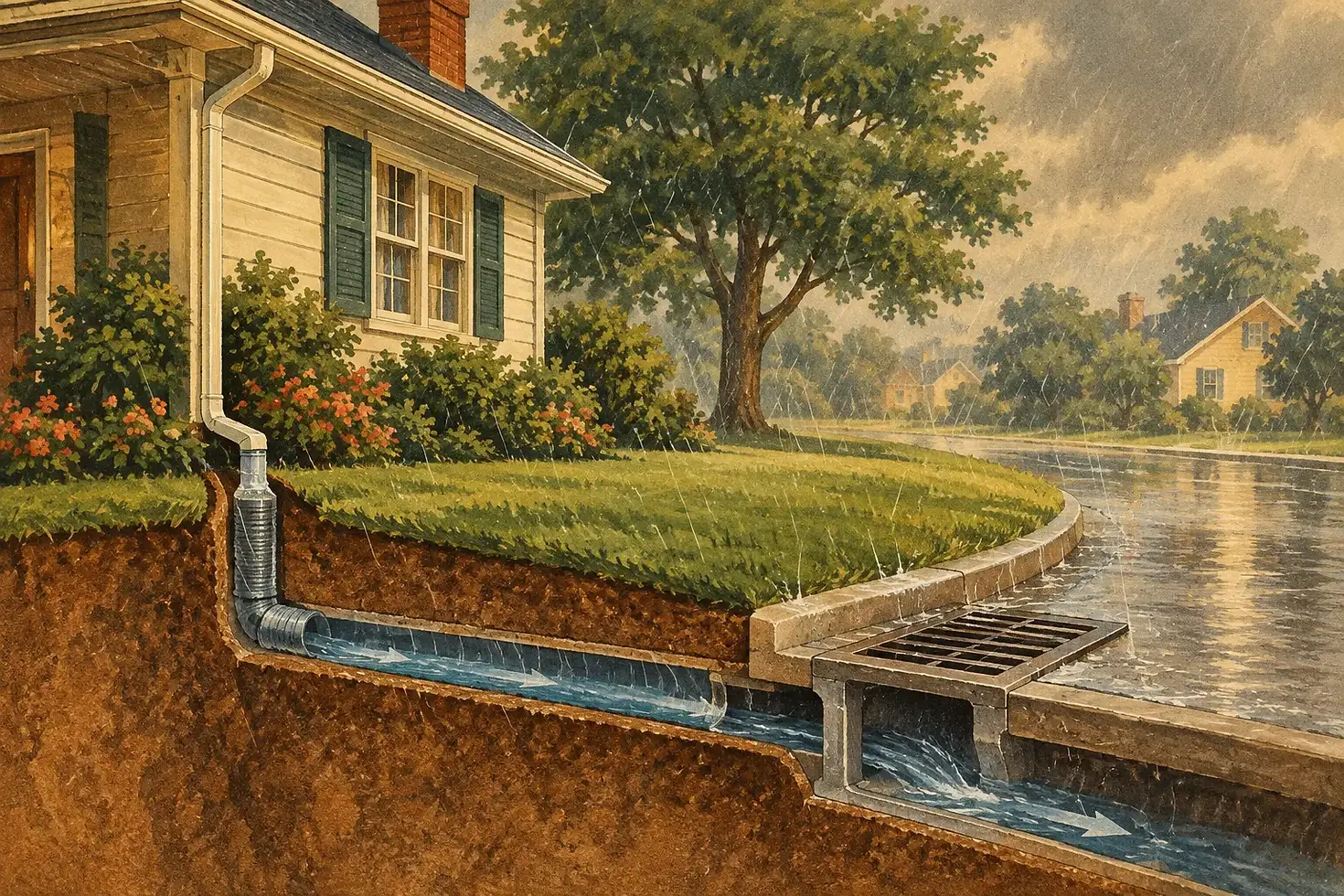
Storm Drainage That Protects Your Property

A hard Oregon rain can turn a small drainage problem into water against the foundation, a flooded parking area, or a washout across a driveway. Proper storm drainage gives rainwater a controlled path away from buildings and hard surfaces before it has the chance to cause expensive damage.
For homeowners, landlords, and commercial property managers, the trouble often starts quietly. A catch basin fills with leaves. Sediment settles in a pipe. Roots grow through an aging line. Then the next heavy storm exposes the blockage all at once. Knowing how your system works and what to watch for can help you act before standing water becomes a larger repair.
What Storm Drainage Does for a Property
Storm drainage handles rainwater runoff from roofs, gutters, downspouts, driveways, parking lots, patios, and landscaped areas. Unlike a sanitary sewer, which carries wastewater from sinks, toilets, and showers, a storm system is designed to move rainwater away from the property.
A residential system may be as simple as gutters connected to downspout drains that discharge safely away from the home. Larger properties may include area drains, trench drains, catch basins, culverts, underground piping, retention areas, and multiple discharge points.
When those components are working, most people never think about them. When they are not, runoff can pool where it should not. That water may seep into crawl spaces or basements, undermine pavement, saturate landscaping, stain exterior walls, and place repeated moisture pressure on a foundation.
The goal is not merely to move water somewhere else. It is to move it through a system that is sized, sloped, and maintained for the amount of runoff the property receives. That last point matters in the Willamette Valley, where long wet seasons can keep soil saturated and expose weak drainage quickly.
The Most Common Causes of Storm Drain Problems
Leaves and roof debris are frequent culprits. Gutters carry needles, moss, twigs, and shingle grit toward downspouts, where material can collect at bends or at the transition to underground piping. A drain may still handle a light rain while partially blocked, making the problem easy to miss until a stronger storm arrives.
Sediment is another common issue, particularly around driveways, rural properties, construction areas, and parking lots. Soil, gravel, mulch, and decomposed organic material settle in catch basins and low spots in a line. Over time, the usable pipe opening becomes smaller and drainage slows.
Tree roots can create a more stubborn blockage. Roots seek moisture and can enter old joints, cracks, or damaged sections of pipe. Once inside, they trap debris and continue to grow. Root intrusion is especially common in older properties with mature landscaping, and it can cause recurring backups unless the condition of the line is addressed.
Pipe damage also changes how water flows. Crushed pipe, separated joints, poor slope, or a sagging section can hold water and debris. In those cases, cleaning may restore flow temporarily, but a camera inspection can show whether the line has a structural issue that needs a longer-term plan.
Signs Your Storm Drainage Needs Attention
Do not wait for a major flood to inspect a drain system. A few warning signs often appear first:
Water pools near a downspout, driveway drain, or catch basin after rain has stopped.
Gutters overflow even though the visible gutter channel looks clear.
A yard, parking area, or walkway develops persistent soft spots, erosion, or sinkholes.
Water backs up from an area drain or emerges from a cleanout during a storm.
Drainage problems return after basic surface debris has been removed.
Some of these symptoms can overlap with plumbing or sewer problems, especially when a property has older underground lines. That is why guessing can waste time. The key question is where the water originates and where it is supposed to go.
Start With Safe, Simple Maintenance
Property owners can prevent many basic clogs with regular surface maintenance. Clear leaves from gutters and remove debris from grates before the rainy season. Make sure downspout outlets are not buried under mulch or blocked by soil. If a catch basin has a removable grate, clear loose debris from the top without reaching into a deep structure or entering any enclosed space.
Walk the property during a moderate rain if it is safe to do so. You can learn a great deal by seeing where runoff collects, whether water escapes from downspout connections, and how quickly drains recover after a downpour. Take note of water that consistently travels toward the building rather than away from it.
Avoid using harsh chemical drain cleaners in outdoor drainage lines. They rarely solve a blockage caused by roots, sediment, or accumulated debris, and they can create safety concerns for anyone who later works on the pipe. A garden hose may help flush a small amount of loose material, but forcing water into a fully blocked line can cause water to surface in an unexpected place.
When Professional Cleaning Makes Sense
Professional service is the right next step when water backs up, the same drain repeatedly clogs, or a blockage appears to be underground. Drain equipment is not one-size-fits-all. The best method depends on what is in the pipe and what condition the pipe is in.
For heavy sediment, grease-like organic buildup, and debris along pipe walls, hydro-jetting can be an effective cleaning option. High-pressure water scours the inside of the line and moves material out of the system. It is more thorough than simply punching a small opening through a clog, but it should be used by a trained technician who understands the pipe material and condition.
For roots or dense obstructions, mechanical root cutting or cable equipment may be needed first. Cleaning roots out of a line improves drainage, but roots often return if they have entered through damaged joints or cracks. A camera inspection after clearing helps identify whether the pipe is intact, misaligned, collapsed, or in need of repair.
Camera inspections are particularly valuable for recurring problems. They replace trial-and-error with a view inside the pipe, allowing a technician to locate the obstruction, assess pipe condition, and explain what should happen next. That may mean cleaning, targeted repair, or simply setting a sensible maintenance schedule.
Private Drains and Public Storm Systems Are Different
One source of confusion is the line between private property drainage and the public storm system. A city or utility may maintain certain public storm mains, inlets, or roadside structures, while the property owner remains responsible for private gutters, downspout lines, catch basins, and underground drains serving the building.
The exact responsibility can depend on the property layout and local rules. If the problem is on your side of the connection, prompt cleaning and repair are generally the owner’s responsibility. If a public inlet or street drainage structure is visibly blocked, reporting it to the appropriate local agency can help protect the surrounding area.
Do not assume that a drain leading toward the street is automatically public. An inspection can identify the route of a private line and help clarify where the issue is likely located.
Protecting Homes, Rentals, and Commercial Sites
Storm drainage maintenance looks different depending on the property. At a single-family home, the priority may be keeping roof runoff away from the foundation and preventing a soggy side yard. At a rental property, regular inspections between tenants can uncover neglected gutters, damaged grates, or pooling areas before a storm creates an emergency.
Commercial sites often need closer attention because parking lots, loading areas, and high-traffic walkways collect more sediment and litter. Standing water is not only a property concern. It can create slip hazards, interfere with customer access, and accelerate pavement damage. A planned cleaning schedule before the wet season is often less disruptive than calling for emergency service during a storm.
For rural properties, culverts and long drain runs deserve special attention. Leaves, branches, soil movement, and animal activity can restrict flow in places that are easy to overlook. If a driveway crosses a drainage path, keeping that culvert open protects both access and the surrounding ground.
A Better Response Than Waiting for the Next Storm
If water is already approaching a building, flowing across a walkway, or backing up from a drain, treat it as a time-sensitive issue. Move belongings away from affected areas if it is safe, keep people clear of standing water near electrical equipment, and avoid removing grates or entering pits during heavy flow. The visible water may be only part of the problem below ground.
For persistent or urgent drainage issues in Salem, Albany, and nearby communities, Canyon Drain can clear blocked lines, inspect underground pipe conditions, and help identify the cause behind repeat backups. Fast cleaning matters, but knowing whether roots, debris, or damaged pipe caused the failure is what helps prevent the next one.
A storm drain does not need attention every day, but it does need attention before it becomes the weak point in a heavy rain. A clear path for water is one of the simplest ways to protect the property you work hard to maintain.


Comments