
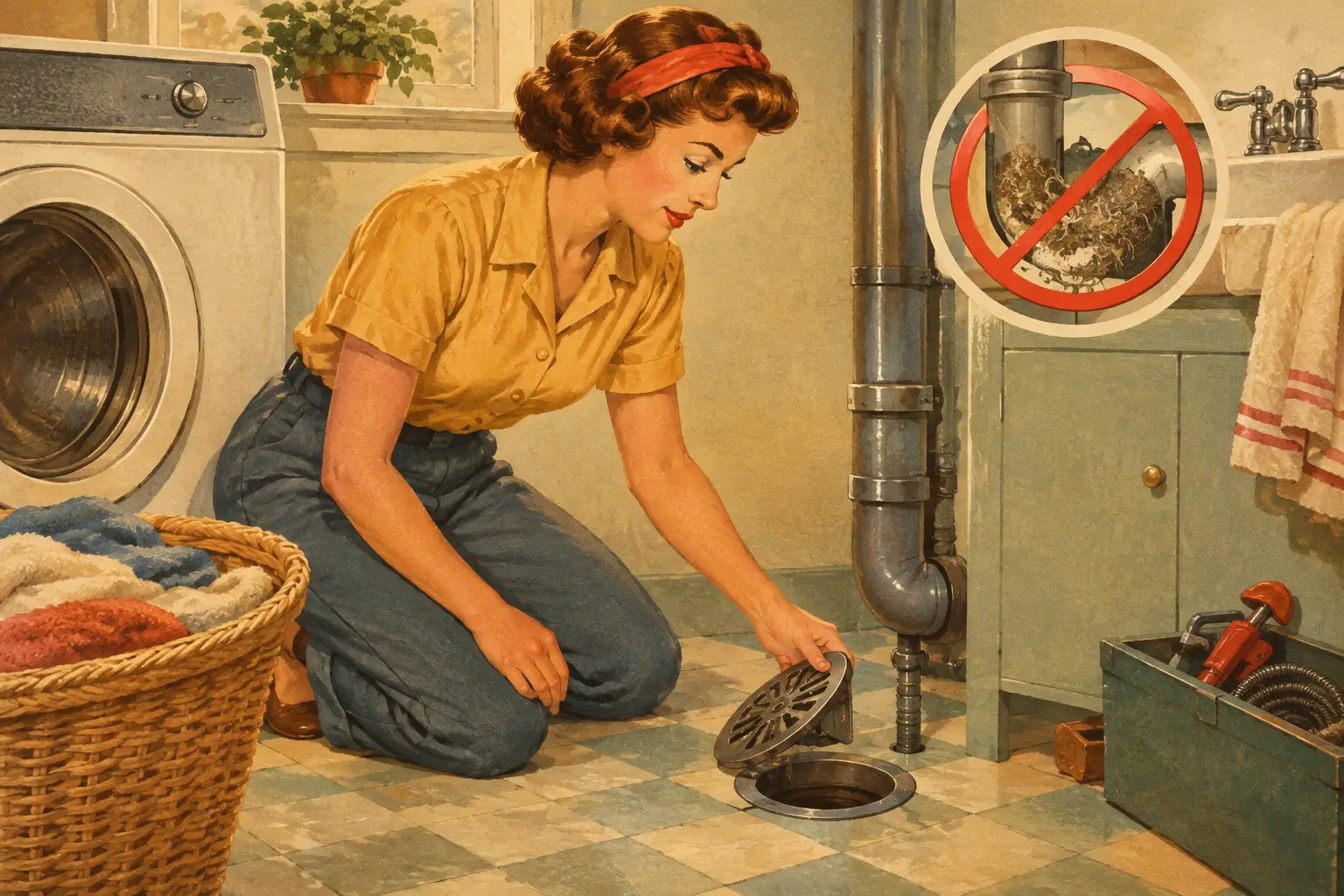
How to Prevent Laundry Drain Backups at Home

A washing machine can send 15 to 25 gallons of water into its drain line in a matter of minutes. When that line is partly clogged, undersized, or damaged, the water has nowhere to go but up - often through the laundry standpipe, floor drain, or a nearby sink. A little routine attention can prevent laundry drain backups before a normal wash day turns into a wet-floor cleanup.
The key is knowing the difference between a small maintenance issue and a warning that the drain line needs professional attention. Lint is common. Repeated overflows, sewer smells, and water appearing in other fixtures are not.
Why laundry drains back up
Laundry drain problems are rarely caused by one thing alone. Every load carries lint, fabric fibers, detergent residue, dirt, pet hair, and sometimes oily residue into the drain. A washing machine discharges water quickly, so even a moderate buildup inside the pipe can cause a sudden backup.
Older homes can have additional trouble. Cast-iron, galvanized, clay, or aging plastic pipe may be rough, cracked, offset, or narrowed over time. In the Willamette Valley, roots can also work their way into buried sewer lines, especially where older pipe joints have opened. The washing machine may be the first fixture to show the problem simply because it releases such a large volume of water at once.
A laundry backup can also point to a blockage farther down the main sewer line. If toilets gurgle, tubs drain slowly, or water rises in a shower when the washer drains, treat it as a whole-house drain concern rather than a laundry-room-only problem.
How to prevent laundry drain backups with simple habits
Start with lint control. A washer's built-in lint trap, if it has one, catches only part of the material leaving the machine. Clean the trap after every load when applicable, and avoid rinsing large amounts of loose lint, mop debris, or pet bedding directly into the washer. Shaking out heavily soiled items outdoors first can keep a surprising amount of debris out of the drain.
A removable mesh lint catcher on the end of a properly installed discharge hose can provide another layer of protection. Check it often. A neglected catcher can become restrictive, causing the washer to pump out too slowly or overflow at the standpipe. It should never be packed tightly or used as a substitute for cleaning a clogged drain.
Use the right amount of detergent. More soap does not mean cleaner clothes. High-efficiency washers require low-sudsing HE detergent, and even then, using too much can leave a sticky film inside the machine and drain piping. Follow the detergent manufacturer's measuring guidance, adjusting for load size and water hardness when needed.
Be careful with liquid fabric softeners as well. They can leave residue, particularly in cooler drain lines. If your laundry drain has a history of slow flow, reducing softener use or choosing an alternative may help limit buildup.
Run hot water only when the fabric-care label allows it, and periodically wash towels or other suitable items on a warmer cycle. Warm water can help move ordinary soap residue and oils through the line, but it will not clear a true blockage, root intrusion, or broken pipe. Do not rely on hot water as a repair.
Check the washer hose and standpipe
The discharge hose should be secure but not sealed airtight into the standpipe. A standpipe needs an air gap around the hose so the drain can vent correctly and so wastewater cannot siphon back toward the machine. Pushing the hose too far down can also create flow problems.
Look for these conditions during a quick laundry-room check:
The drain hose is cracked, kinked, loose, or shoved too deeply into the standpipe.
The standpipe wobbles, leaks at a joint, or shows rust and staining around connections.
Water appears around the floor drain or base of the wall when the washer enters its drain cycle.
The washer drains normally on small loads but causes trouble on larger loads.
If the washer was recently replaced, do not assume the new machine is the issue. Newer machines may pump water out at a different rate than the old one, exposing a partial clog that had been building for years. A professional can determine whether the pipe diameter, standpipe setup, or drain condition is causing the overflow.
Avoid chemical drain cleaners in laundry lines
When water starts rising in the standpipe, reaching for a bottle of chemical cleaner is understandable. It is also often a poor fit for the problem. These products may not reach the clog effectively, especially if water is already standing in the line. They can damage older piping, create hazardous conditions for anyone working on the drain, and leave behind a clog that returns soon after.
Chemical cleaners are particularly ineffective against tree roots, collapsed pipe, heavy lint mats, and thick sludge farther down a sewer line. Repeated use can make the eventual repair more difficult without resolving the reason the backup occurred.
For a minor slow drain with no backup history, a careful cleaning of accessible washer components and a review of detergent use may be enough. For recurring slow drainage, mechanical cleaning is the safer and more dependable approach.
Know the early warnings before an overflow
Laundry drain backups usually give some notice. The warning may be subtle at first: a brief gurgle, a sewer odor, water rising in the standpipe before dropping, or a floor drain that stays damp after a wash cycle. These signs matter because the line may still be flowing enough to avoid an emergency, but it is losing capacity.
Pay close attention if more than one fixture is affected. A bathroom sink that bubbles when the washer drains, a toilet that flushes weakly, or a shower that fills during laundry are strong clues that the restriction is beyond the laundry branch line. Stop running water-heavy appliances until the cause is identified. Continuing to run the washer, dishwasher, or multiple showers can push wastewater into the lowest drain in the building.
For landlords and property managers, a simple tenant instruction can prevent bigger damage: report gurgling, slow drains, and water around the laundry standpipe right away. Waiting for a full overflow risks damaged flooring, drywall, insulation, and personal property, along with possible sanitation concerns.
Schedule drain maintenance based on the pipe, not the calendar
There is no single maintenance schedule that fits every property. A newer home with modern, clear pipe may need little more than good laundry habits and occasional observation. An older property with mature trees, repeat clogs, or a history of sewer work deserves a more proactive plan.
A camera inspection is useful when backups return after cleaning or when the cause is unclear. It allows a technician to see whether the line has root intrusion, pipe scale, cracks, offsets, standing water, or a localized blockage. That matters because each condition calls for a different solution. Hydro-jetting can remove grease, sludge, and buildup from suitable pipes, while roots or damaged sections may require more targeted work.
The trade-off is straightforward: routine professional service costs less than emergency cleanup in many cases, but unnecessary cleaning is not a good value either. Accurate diagnosis helps property owners spend money on the real condition of the pipe, not guesswork.
What to do if the laundry drain starts overflowing
Stop the washer immediately and do not start another cycle. If it is safe to do so, turn off the machine's water supply valves to prevent an additional leak. Keep people and pets away from wastewater, particularly if the backup has a sewer odor or involves water from other fixtures.
Avoid plunging a standpipe that is full of dirty water, and do not add chemical cleaner. Take note of what else is draining slowly or backing up, because that information helps identify whether the issue is limited to the laundry line or connected to the main sewer.
A prompt drain inspection can often prevent a small laundry-room overflow from becoming damage in several rooms. For homes and rental properties in Salem, Albany, Stayton, Scio, and Aumsville, Canyon Drain can diagnose the line with the right equipment and clear the blockage based on what is actually inside the pipe. The best time to address a warning sign is while the washer still drains - not after the next load reaches the floor.


Comments