
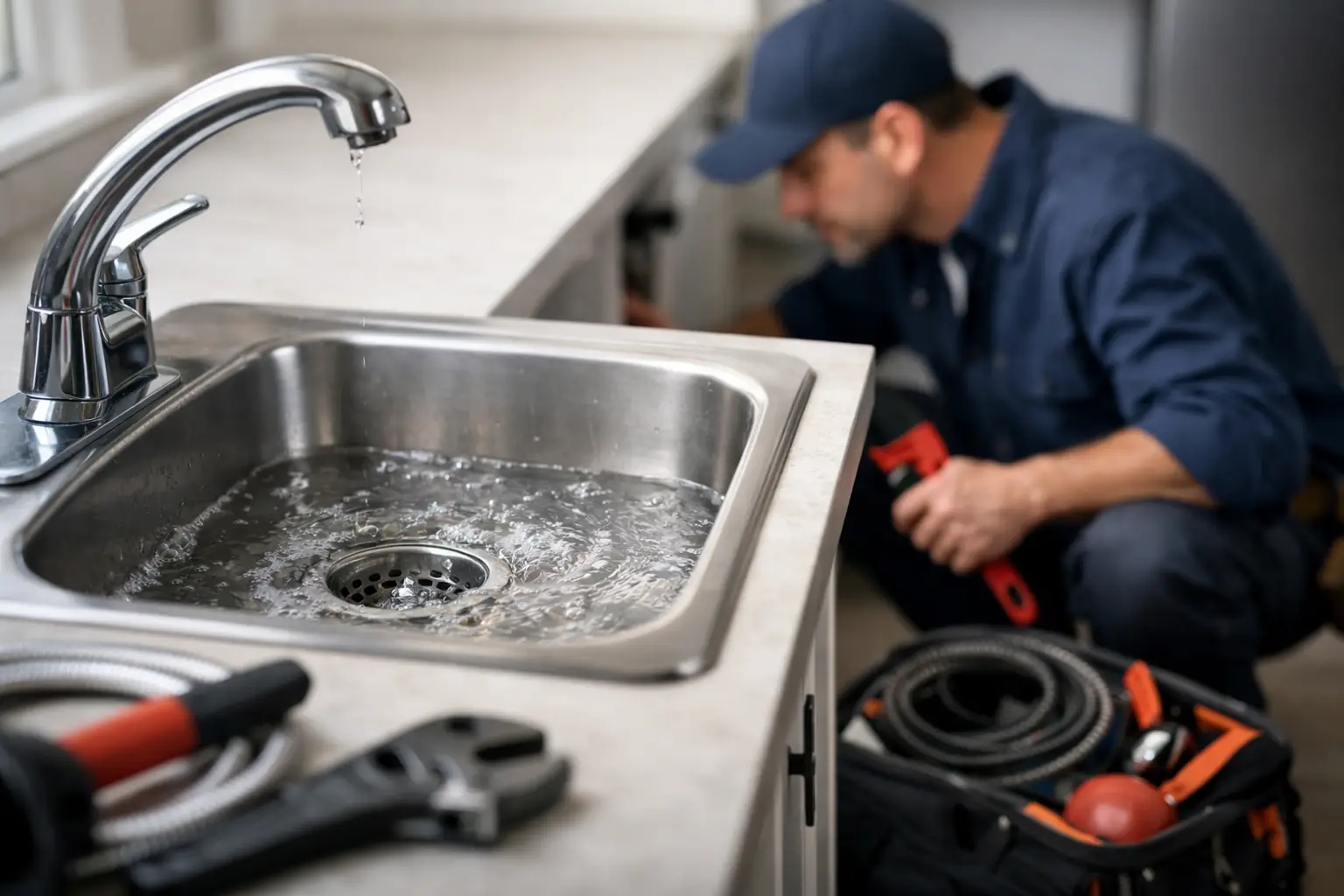
When to Get Professional Help for a Slow Draining Sink

A sink that takes a little longer to empty can seem like a minor annoyance. But searching for slow draining sink professional help is often a smart move when the problem keeps returning, affects more than one fixture, or comes with odors and gurgling. A slow drain is usually an early warning that material is building up in the line or that a larger drain problem is developing farther down.
For homeowners, landlords, and business owners, the goal is not simply to get water moving for a day or two. It is to find out why the drain slowed down and correct the condition before it becomes a complete clog, a messy backup, or an after-hours emergency.
What a slow sink is trying to tell you
The location of the sink matters. A bathroom sink commonly slows because of hair, toothpaste residue, soap scum, and small items caught around the stopper. Kitchen sinks deal with a different mix: grease, food particles, coffee grounds, starches, and dish soap residue that can coat the pipe over time.
Those are the straightforward causes. The concern grows when a sink has been cleaned several times but still drains slowly. The visible clog may only be a small part of a thicker buildup farther along the branch line. In older homes and commercial properties, scale inside aging pipes, a damaged section of pipe, or roots entering a sewer line can also restrict flow.
A slow drain does not always mean the main sewer line is failing. Still, it should not be ignored when toilets, tubs, showers, or other sinks start draining poorly at the same time. Multiple slow fixtures point beyond one sink trap and may indicate a blockage in a shared drain or sewer line.
Safe first steps before calling for help
If the issue is limited to one sink and there is no standing water or sewage odor, a few simple checks can be worthwhile. Remove the stopper if possible and clean away the hair or debris caught on it. Then check and clean the pop-up assembly, where buildup often collects out of sight.
A sink plunger can also help, provided it is used correctly. Add enough water to cover the plunger cup, block the overflow opening with a damp cloth, and use several steady plunges. For a double-bowl kitchen sink, seal the second bowl while plunging the clogged side. This creates the pressure needed to move a nearby obstruction.
If you are comfortable doing so, placing a bucket below the P-trap and removing the trap can reveal debris lodged close to the drain. Reassemble it carefully, making sure the washers are seated properly before testing for leaks.
Skip the chemical drain cleaners. Strong chemicals can damage certain pipes and seals, create hazardous fumes, and leave caustic liquid sitting in the drain for the person who eventually has to service it. They may burn a narrow channel through soft buildup without removing the actual blockage, so the sink slows again soon after.
Do not force a long cable or improvised tool into the line if you are unsure where the blockage is. It is possible to push debris deeper, damage a fixture, or get equipment stuck in the pipe. A quick do-it-yourself attempt makes sense for a simple stopper or trap clog. Repeated attempts at a recurring problem usually waste time and can make the diagnosis less clear.
When slow draining sink professional help is the right call
Professional service is recommended when the sink remains slow after you clean the stopper and trap, especially if it has clogged more than once in a short period. A technician can clear the line beyond the point where ordinary hand tools reach and determine whether the blockage is grease, hardened scale, roots, or another issue.
Call sooner rather than later if you notice water backing up into a second sink, a tub, or a shower. Gurgling sounds after the sink drains are another warning sign, as are sewage smells, discolored water coming up through a drain, or water appearing around a floor drain. These symptoms can signal trouble in a shared line rather than the sink itself.
For rental properties, prompt service protects more than the plumbing. A sink that drains poorly can become a tenant complaint, lead to water damage when it finally backs up, or create an unsanitary condition in a commercial kitchen or restroom. Addressing the restriction while it is still a slow drain is generally simpler than handling a full backup.
If the sink is completely blocked and water is threatening cabinets, floors, or inventory, stop using the fixture. Avoid running a dishwasher, washing machine, or other appliance that may feed the same drain line. In that situation, an emergency drain professional is the safer choice.
What a drain professional can do differently
The biggest difference is diagnosis. A professional does not have to guess whether the blockage is near the sink or farther down the system. Drain cleaning equipment can reach deeper into the line and remove material that a small household snake cannot handle effectively.
For many sink clogs, mechanical cabling clears the obstruction and restores normal flow. But if grease, soap residue, mineral scale, or sludge has coated a longer stretch of pipe, hydro-jetting may be the better solution. High-pressure water cuts through buildup and washes it out of the pipe rather than merely poking a hole through it.
Hydro-jetting is not automatically the right answer for every property. Pipe condition matters. A technician may recommend a camera inspection first, particularly when a line is older, repeatedly clogs, has a history of roots, or is suspected of having cracks or offsets. A real-time camera view can show where the restriction is and whether cleaning alone is likely to hold.
That inspection can prevent the frustrating cycle of clearing the same drain every few months. If roots are entering a sewer line or a pipe is broken, the lasting repair may involve more than drain cleaning. Knowing that upfront gives property owners a clearer decision and avoids paying for repeated temporary fixes.
Questions to ask when you schedule service
A dependable drain company should be willing to explain what it finds in plain language. Ask whether the issue appears limited to the fixture line or involves a larger drain connection. If the clog is recurring, ask what is causing the recurrence and whether a camera inspection would help confirm the condition of the pipe.
It also helps to ask about the recommended method and why it fits the problem. Cabling, hydro-jetting, and camera work serve different purposes. The best approach depends on the type of buildup, pipe material, access points, and whether the drain serves a home, rental unit, restaurant, office, or other commercial space.
At Canyon Drain, the focus is on clearing the immediate blockage while looking for the pipe conditions that can bring it back. That practical approach matters in the Willamette Valley, where older plumbing systems, rural properties, and tree-lined lots can all present different drain challenges.
Keep the drain moving after it is cleared
Once the sink is flowing normally, small habits can reduce the chance of another quick clog. In bathrooms, use a stopper or screen that catches hair and clean it regularly. In kitchens, scrape food into the trash or compost, and let grease cool in a container instead of rinsing it down the sink. Even if a garbage disposal is installed, it is not designed to process every food scrap or cooking oil.
Run hot tap water briefly after washing dishes to help move ordinary residue through the line, but do not rely on hot water to dissolve a serious grease buildup. For commercial kitchens, regular cleaning and grease-management practices are especially important because a slow drain can quickly affect daily operations.
A slow sink deserves attention before it becomes a disruption. If basic cleaning does not restore normal drainage or the warning signs point to a bigger line problem, getting a clear diagnosis now can protect your property from a much less convenient backup later.


Comments