
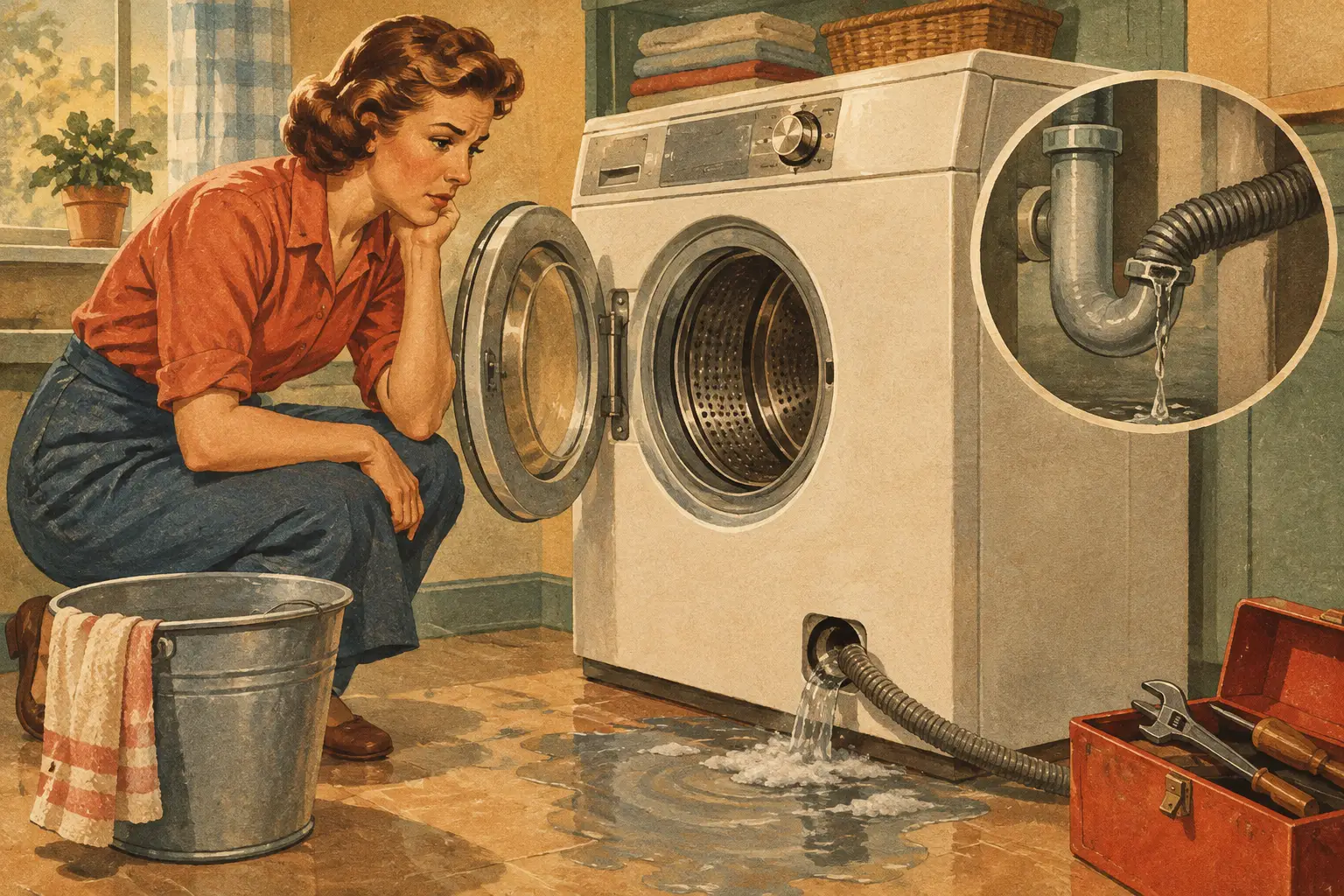
Washing Machine Drainage Problems and Fixes

A washing machine that leaves water in the tub, sends dirty water across the laundry-room floor, or makes a nearby sink gurgle is more than an appliance inconvenience. Washing machine drainage puts a large volume of water into one drain line in a short time, so it often exposes a partial clog or pipe problem that has been building quietly for months.
The key is figuring out whether the issue is inside the washer, at the drain hose connection, or farther down the household drain line. A quick check can prevent a small laundry backup from turning into damaged flooring, wet drywall, or a sewer-water cleanup.
How washing machine drainage is supposed to work
At the end of a wash or rinse cycle, the washer's pump pushes water through a flexible drain hose and into a standpipe, utility sink, or dedicated laundry drain. From there, the water travels through a P-trap and branch drain before joining the main sewer line or septic system.
That setup has to handle a sudden discharge, not a slow trickle. If the pipe is restricted by lint, soap residue, grease, roots, scale, or a damaged section of pipe, the water may rise in the standpipe before it can drain away. When it reaches the top, it spills onto the floor.
A washer drain problem is not always a clog. An improperly positioned hose can siphon water out of the machine or restrict discharge. A worn drain pump can leave water in the washer tub. Still, when the machine drains slowly and water backs up from the standpipe or nearby fixture, the drain line itself deserves attention.
Signs your laundry drain needs more than a quick reset
A single slow drain may respond to simple maintenance, but recurring symptoms usually point to a deeper restriction. Watch for water bubbling up in the standpipe, a laundry sink filling while the washer empties, gurgling from a nearby toilet or sink, sewer odors near the laundry area, or water appearing around a floor drain.
Another common pattern is a backup that happens only on the drain cycle. The bathroom sink may seem normal because it releases a relatively small amount of water. The washing machine, however, can overwhelm a partially blocked line in less than a minute.
If several fixtures are slow, or flushing a toilet affects the laundry drain, treat the problem as a possible main sewer line issue. Stop running water in the home until the cause is identified. Continuing to wash clothes, shower, or run the dishwasher can make a backup much worse.
What the backup location can tell you
Water overflowing from the standpipe while the rest of the home drains normally often indicates a clog in the laundry branch line. A laundry sink that fills only when the washer drains can point to a shared line restriction or a blockage downstream of the sink connection.
When water comes up through a low floor drain, especially in a basement, garage, or utility room, the problem may be farther along the building drain or sewer line. In older Willamette Valley homes, invasive tree roots and aging pipe materials can create repeat trouble that no amount of store-bought drain cleaner will solve.
Safe checks to make before calling for service
Start by stopping the washer and cleaning up standing water safely. Avoid touching any water that may contain sewage, and keep electrical cords and outlets dry. Once the immediate mess is controlled, look at the drain hose. It should not be kinked, crushed behind the machine, or pushed so deeply into the standpipe that it creates an airtight seal.
Check the hose for cracks and make sure its end is secured so it cannot jump out during discharge. If your washer has a removable pump filter, follow the manufacturer instructions to inspect it. Small clothing items, lint, coins, and other debris can block the filter or pump area.
A clogged lint screen or a heavy lint load in the drain can also contribute to slow washing machine drainage. Cleaning the washer's accessible filter and using a lint catcher on the discharge hose can reduce buildup over time. A lint catcher needs regular cleaning, though. Left packed with lint, it can restrict flow rather than help it.
Do not use chemical drain cleaner in a washing machine standpipe. These products may not reach the actual clog, can damage certain pipe materials, and create a hazard for anyone who later opens the line. They are especially risky when water is already standing in the pipe.
Why washing machine drains clog so often
Laundry wastewater carries more than water. Detergent residue, fabric fibers, pet hair, soil, and minerals can coat the inside of a drain over time. Powder detergents and excess detergent can leave behind residue, particularly in cool-water washes. Liquid fabric softener can add to the film.
The laundry line may also connect to a kitchen or bathroom drain line where grease, hair, and soap buildup are already narrowing the pipe. In rental properties and busy households, frequent loads can reveal that restriction quickly.
In some cases, the real issue is the pipe itself. Older galvanized steel can corrode internally until the opening is much smaller than it appears from the outside. Clay and older sewer pipes can shift, crack, or allow roots to enter at joints. A line may drain after being snaked, then clog again weeks later because the underlying damage or root intrusion remains.
That is why repeat backups deserve a diagnosis, not just another temporary clearing.
When professional drain cleaning is the right move
Call for professional help when the standpipe overflows, the same backup returns, multiple fixtures are affected, or you suspect sewage in the water. These are situations where guessing can cause property damage and where the right equipment matters.
A drain technician can clear a laundry branch line with the appropriate cable machine, then assess whether the restriction is isolated or part of a larger sewer problem. For heavy buildup in suitable pipe systems, hydro-jetting can wash away accumulated residue from the pipe walls instead of merely punching a small opening through the blockage.
A camera inspection is especially useful after repeated washing machine drainage failures. It can show whether the pipe has roots, cracks, offsets, corrosion, or a stubborn buildup location. That information helps a property owner make a repair decision based on the actual condition of the line, not a best guess.
For homeowners, landlords, and property managers in Salem, Albany, Stayton, Scio, and Aumsville, Canyon Drain can provide drain cleaning and camera-based troubleshooting when a laundry drain will not stay clear. A prompt inspection can be far less costly than repeated overflows in a finished laundry room or occupied rental.
Preventing the next laundry-room backup
Use the amount of detergent recommended for your washer and water conditions. More soap does not mean cleaner clothes, and it can leave more residue in the drain. Periodically run the washer's cleaning cycle according to the appliance manual, and clear lint from accessible filters and hose catchers.
Give the drain hose room behind the washer so it is not pinched when the machine is pushed back. If you notice a new gurgle, slow laundry sink, or a small rise in the standpipe, address it before the next large wash day. Early service is usually simpler than responding after a full overflow.
A washing machine should make laundry easier, not leave you watching the standpipe for trouble. When the drain line cannot keep up, treating the cause early protects the room, the appliance, and the rest of the plumbing system.


Comments