
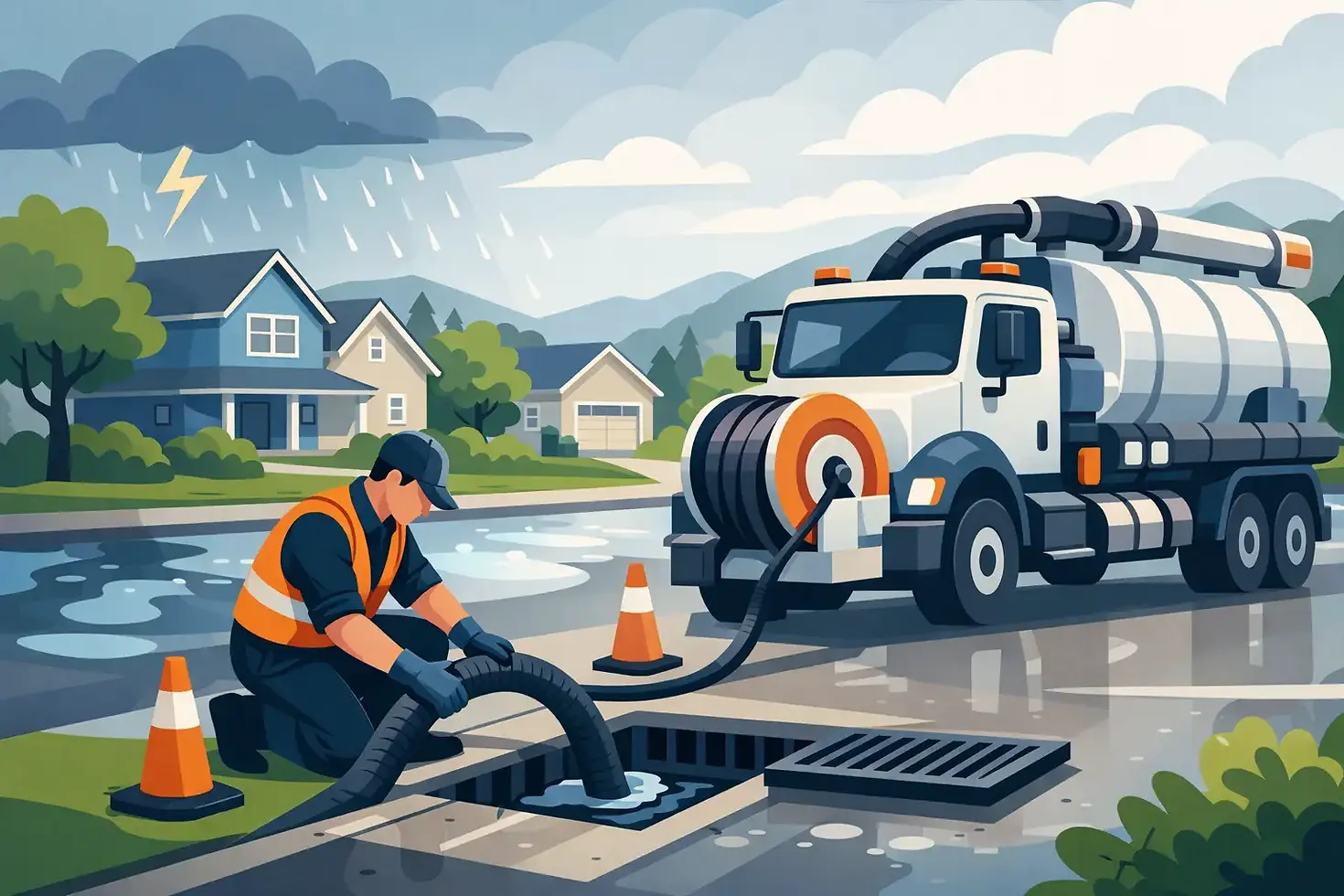
Residential Storm Drain Cleaning Salem Homeowners Trust

A Salem rainstorm can turn a small drainage problem into standing water around the foundation, a flooded driveway, or a soggy lawn in a hurry. Residential storm drain cleaning Salem homeowners schedule before the wet season can keep runoff moving where it belongs instead of letting it collect near the home.
Storm drainage is easy to overlook when it works. Downspouts disappear into buried pipes, yard drains sit quietly in low spots, and catch basins collect water without much attention. But Salem's wet winters, falling leaves, fir needles, soil, and mature trees can gradually restrict those systems. By the time water stops draining, the blockage may have been building for months.
What a Residential Storm Drain System Does
A home storm drain system handles rainwater, not household wastewater. It may include roof gutters and downspouts, underground downspout lines, driveway trench drains, area drains, landscape drains, and catch basins. Depending on the property and neighborhood, the line may discharge to a private drainage area, a public storm system, or another approved outlet.
That distinction matters. A clog in a private drain line on your property is usually the homeowner's responsibility. A problem farther downstream in a public system may require attention from the local agency. The challenge is that water pooling in your yard does not tell you exactly where the restriction is. A proper inspection helps identify whether the issue is a simple inlet blockage, a buried pipe problem, or something beyond the private line.
Storm drain water should not be redirected into a sanitary sewer line. Those systems have different jobs, and improper connections can create backups, code concerns, and expensive corrections. When the drainage layout is unclear, it is better to diagnose the line than make assumptions based on where the water appears.
Signs Your Storm Drain Needs Cleaning
The best time to address a clogged storm drain is before a heavy rain proves there is a problem. Watch for these common warning signs around your Salem property:
Water standing around a yard drain, catch basin, or driveway grate after rain has stopped
Downspouts overflowing or backing up at the connection to an underground line
Mud, leaves, or pine needles collecting around grates and drain openings
Water running toward the house, garage, crawl space vents, or retaining walls
A recurring wet or soft area in the yard, even when other ground has dried
One isolated puddle does not always mean the drain is clogged. A yard may simply have poor grading or compacted soil. But when water repeatedly collects in the same place, drains slowly, or approaches the structure, the drainage system deserves a closer look.
Why Salem Properties See Repeat Drainage Problems
Leaves and roof grit are common culprits, but they are not the only ones. Older buried drain lines can shift, crack, sag, or separate at joints. Sediment settles in low sections of pipe and gradually reduces the available opening. Tree roots can enter through small gaps and grow toward the moisture inside the line.
Root intrusion is especially common near established trees. A drain may appear to work during light rain, then fail during a heavier storm because roots and debris have reduced the pipe's capacity. Simply clearing the opening may bring temporary relief, but it will not answer whether the pipe is damaged or whether roots are likely to return.
Residential Storm Drain Cleaning in Salem: The Right Approach
Cleaning a storm drain is not always as simple as pulling debris from a grate. Surface cleaning is useful and should be part of regular maintenance, but it only addresses what you can reach. If the restriction is inside a buried pipe, professional equipment can clear the line more thoroughly and show what is happening underground.
A drain technician may begin by checking the catch basin, drain opening, downspout connections, and accessible cleanouts. From there, a camera inspection can travel through the line to locate buildup, roots, standing water, breaks, or a collapsed section. Real-time camera footage replaces guesswork with a clear view of the pipe condition.
For heavy sediment, organic debris, or root-filled lines, high-pressure hydro-jetting can scour the inside of the pipe and restore flow. The appropriate method depends on the pipe material, age, condition, and type of blockage. A damaged or badly offset pipe may need repair rather than repeated cleaning. That is why an inspection matters, particularly when a drain clogs again soon after service.
Canyon Drain LLC uses camera inspections and professional drain-cleaning equipment to identify both the immediate blockage and the underlying condition that caused it. For a homeowner, that means a clearer recommendation instead of trial-and-error service.
What You Can Safely Do Before Calling for Service
There are a few practical steps homeowners can take without putting themselves at risk. Clear loose leaves, moss, and mulch from visible grates. Make sure downspout extensions are not crushed, disconnected, or buried under soil. After a light rain, observe where water enters the system and where it begins to back up.
Avoid forcing a garden hose, metal rod, or rented machine into an underground drain if you do not know the pipe layout. Old lines can be fragile, and a tool can become stuck in a bend or damaged section. Chemical drain cleaners are also a poor choice for storm systems. They do little for leaves, mud, roots, and pipe damage, while creating unnecessary safety concerns.
Never enter a catch basin, vault, or confined drainage structure. These spaces can contain unstable surfaces, poor air quality, and hidden hazards. What looks like a simple yard drain from above can connect to a deeper system below.
Cleaning Versus Repair: Knowing the Difference
A professionally cleaned line should carry water freely, but cleaning cannot repair a broken pipe. If camera footage shows a crack, separation, severe belly, or collapsed section, recurring clogs are likely until that condition is corrected.
The right solution depends on the finding. A line packed with sediment may only need thorough cleaning. Roots may require cleaning now and a plan for repair if the intrusion is severe or frequent. A pipe with major damage may need targeted replacement. Honest diagnosis protects property owners from paying for repeated cleanings when the real issue is structural.
This is also where pricing should be straightforward. Entry-level drain service can start at $150, while total cost depends on access, line length, blockage severity, camera findings, and whether repair is needed. A clear explanation of the work before major decisions helps homeowners and property managers plan with confidence.
A Better Maintenance Schedule for Salem Rain
For many homes, a visual check in early fall and another after the heaviest leaf drop is a sensible routine. Properties beneath large trees, homes with low-lying yards, and rental properties that have had previous drainage issues may need more frequent attention.
Do not wait for winter flooding to make storm drain maintenance a priority. Cleaning visible debris before the rainy season reduces the material that can wash into underground lines. If a system has a history of backups, a preventive camera inspection and cleaning can be less disruptive than responding after water reaches a garage, foundation, or landscaped area.
For landlords and property managers, keeping a simple record of past drain locations, service dates, and camera findings can be especially useful. It helps identify repeat trouble spots and gives maintenance teams a better starting point when a tenant reports flooding.
A dry grate and a clear gutter can make a property look ready for rain, but the buried line is what determines whether water has somewhere to go. Addressing slow drainage early gives you more options, protects the areas around your home, and makes the next Salem downpour one less thing to worry about.


Comments